

Introduction
One of the first questions every developer faces when moving to AWS is: "Where do I put my code?"
AWS offers over 200 services, but for running applications, the choice usually comes down to three main contenders: Amazon EC2, AWS Lambda, and Amazon ECS.
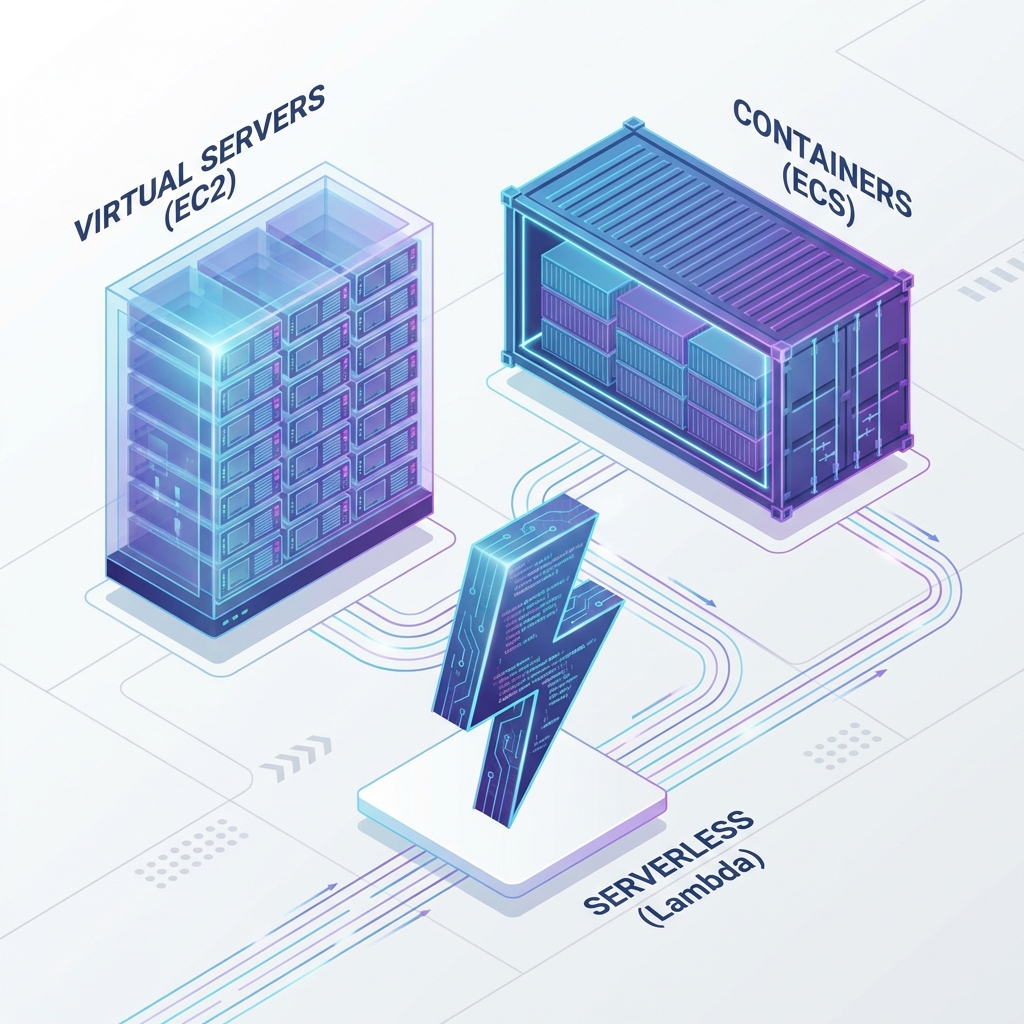
Each of these represents a different paradigm of cloud computing:
- EC2 (Virtual Machines): You manage the server.
- Lambda (Serverless): You manage only the code.
- ECS (Containers): You manage the application packaging.
In this guide, we’ll break down the pros, cons, and best use cases for each to help you decide which one fits your project.
1. Amazon EC2 (Elastic Compute Cloud)
The Virtual Server approach.
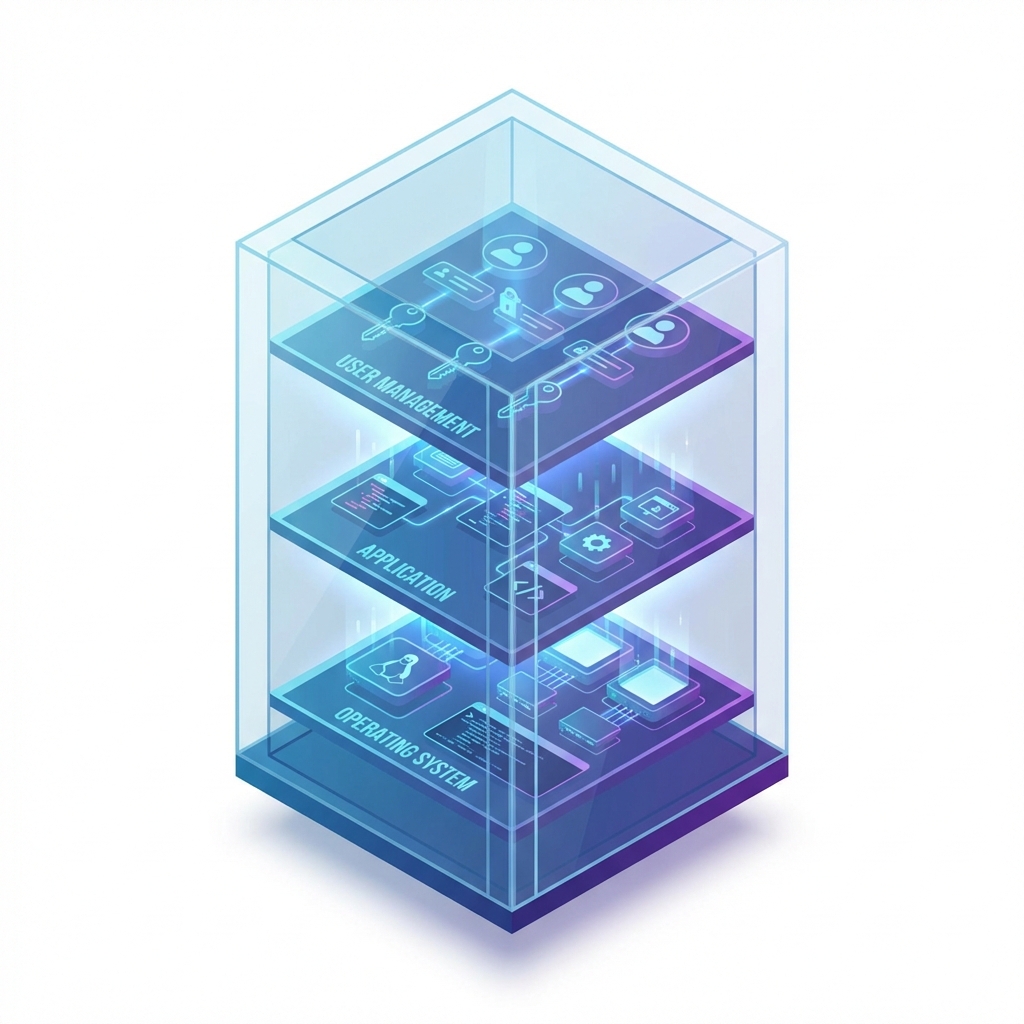
Think of EC2 as a remote computer that you rent. You get full access to the operating system (OS), and you can install whatever software you want. It’s exactly like having a physical server in your office, but it lives in an Amazon data center.
Pros:
- Full Control: You have root access and can configure the OS, network, and security settings exactly how you want.
- Flexibility: Runs any application (legacy apps, databases, heavy processing tasks).
- No Time Limits: Processes can run indefinitely (unlike Lambda).
Cons:
- High Maintenance: You are responsible for OS updates, security patches, and scaling.
- Cost: You pay for the server as long as it’s running, even if it’s idle (though auto-scaling helps).
When NOT to use EC2:
- Simple Static Websites: Use S3 + CloudFront instead. It's cheaper and faster.
- Small, Sporadic Tasks: If you have a script that runs once a day for 5 seconds, EC2 is overkill. Use Lambda.
- Containerized Microservices: Managing Docker manually on EC2 (or via Beanstalk) can be a headache compared to ECS.
Best For: Legacy applications, long-running tasks, databases, and scenarios requiring specific OS configurations.
2. AWS Lambda
The Serverless approach.
With Lambda, you don't see or manage any servers. You simply upload your code (a function), and AWS runs it in response to events (like an API call, a file upload, or a timer). You pay only for the milliseconds your code runs.
Pros:
- Zero Maintenance: No OS to patch, no servers to manage.
- Automatic Scaling: Scales from 0 to 10,000 requests instantly without you lifting a finger.
- Cost-Efficient: Free for idle time. Perfect for sporadic traffic.
Cons:
- Cold Starts: The first request after a period of inactivity might take a second or two to load (java/C# are slower than Node/Python).
- Time Limits: Functions can run for a maximum of 15 minutes.
- Limited Control: You can't install custom OS packages easily.
When NOT to use Lambda:
- Long-Running Processes: Tasks taking >15 minutes (like video transcoding) will time out.
- Steady, High-Load Traffic: At a certain scale, paying per request becomes more expensive than a reserved EC2 instance.
- WebSocket APIs: Creating persistent connections with Lambda is possible but complex and costly.
Best For: API backends, data processing triggers (e.g., resizing an uploaded image), cron jobs, and event-driven architectures.
3. Amazon ECS (Elastic Container Service)
The Container approach.
ECS is a service for running Docker containers. Containers allow you to package your application with all its dependencies, ensuring it runs the same way everywhere. ECS typically runs on top of AWS Fargate, which is a serverless engine for containers.
Pros:
- Portability: If it runs in Docker, it runs in ECS. Easy to move between environments.
- Performance: Faster startup than big VMs, more control than Lambda.
- Microservices: Ideal for breaking down large applications into smaller, communicating services.
Cons:
- Complexity: Requires knowledge of Docker and container orchestration.
- Configuration: More setup required than Lambda (Task Definitions, Services, Clusters).
When NOT to use ECS:
- Extremely Simple Apps: If you just have a "Hello World" API, ECS is too much configuration.
- Monolithic Legacy Apps: If your app isn't "container-ready" (e.g., depends on local file storage), sticking to EC2 is safer.
Best For: Microservices, long-running applications that need custom environments, and migrating modern apps to the cloud.
Comparison Summary
| Feature | Amazon EC2 | AWS Lambda | Amazon ECS (Fargate) |
|---|---|---|---|
| Type | Virtual Machine (VM) | Serverless Function | Container Orchestrator |
| Management | High (OS, Patches) | None (Code only) | Medium (Docker config) |
| Scaling | Manual / Auto-scaling groups | Automatic & Instant | Automatic |
| Cost Model | Pay per hour/second running | Pay per request & duration | Pay for vCPU/RAM used |
| Startup Time | Minutes | Milliseconds (cold start) | Seconds |
| Ideal For | Monoliths, Databases | Event-driven, APIs | Microservices, Docker |
Cost Comparison Scenario
Imagine an API processing 100,000 requests per month.
- EC2 (t3.micro):
- Running 24/7 = ~$7.50 / month.
- Note: You pay even when no one is using it.
- ECS on Fargate (0.5 vCPU, 1GB RAM):
- Running 24/7 = ~$15.00 / month.
- Note: You pay for the guaranteed capacity.
- Lambda (100k requests, 512MB RAM, 200ms duration):
- Total Cost = $0.00.
- Note: This falls well within the AWS Free Tier. Even without free tier, it would be cents.
Verdict: For low traffic or sporadic workloads, Lambda is significantly cheaper. For high, constant traffic (millions of requests), EC2 Reserved Instances become the most cost-effective.
The Hybrid Approach
In reality, most modern architectures don't choose just one—they use a Hybrid Approach.
Example: An E-commerce Store
- Frontend: Hosted on S3 + CloudFront (Static site).
- Product API: Runs on ECS (Fargate) for consistent performance and container management.
- Image Processing: Uses Lambda. When a user uploads a product photo, S3 triggers Lambda to resize it.
- Database: Runs on RDS (Managed Database) or self-hosted on EC2 for maximum tuning.
Conclusion: Which One Should You Choose?
- Choose EC2 if you want full control, have a legacy app, or need the absolute cheapest option for high, constant CPU usage.
- Choose Lambda if you want to ship code fast, hate managing servers, and have variable traffic.
- Choose ECS if you are adopting modern DevOps practices, using Docker, and building a microservices architecture.