

In the digital marketing world, driving traffic to your website is crucial. One of the most effective ways to attract targeted visitors quickly is through Pay-Per-Click (PPC) marketing. PPC is an online advertising model where advertisers pay a fee each time their ad is clicked. Unlike organic strategies, PPC gives you immediate visibility on search engines and social platforms.
What is PPC Marketing?
PPC (Pay-Per-Click) marketing is a model of internet marketing where advertisers pay a small fee every time their ad is clicked. Essentially, it's a way of buying visits to your website rather than earning them organically.
Common platforms for PPC:
- Google Ads
- Bing Ads
- Facebook Ads
- Instagram Ads
- LinkedIn Ads
Key Features of PPC Marketing
- Instant Traffic: Unlike SEO, PPC delivers immediate traffic to your site once the campaign is live.
- Targeted Audience: Reach people based on demographics, location, devices, interests, and behavior.
- Budget Control: Set daily or monthly limits to control costs effectively.
- Performance Tracking: Every click is measurable, providing insights into ROI.
- Ad Variations & Testing: Run A/B tests to find which ads perform best.
- High Conversion Potential: Well-targeted PPC campaigns often result in better leads and sales.
How to Find High-ROI Keywords for PPC
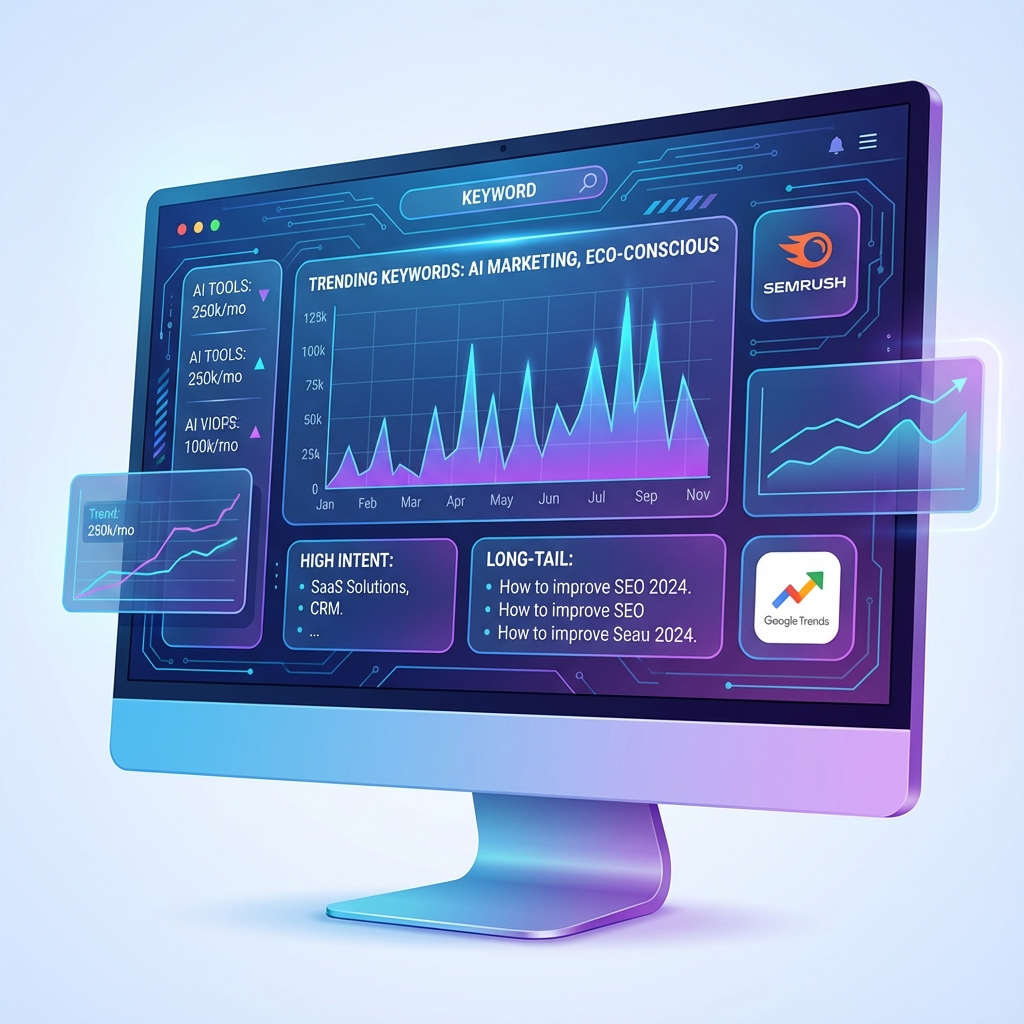
Finding the right keywords is the foundation of any successful PPC campaign. Here's a step-by-step approach:
Step 1: Identify Problem Keywords
Start by thinking about what problems your product or service solves:
- Software: "project management tool," "time tracking software," "CRM for small business"
- Service: "best plumber near me," "website designer Coimbatore," "digital marketing agency"
- E-commerce: "buy organic skincare online," "affordable running shoes," "laptop deals"
Step 2: Use Keyword Research Tools
Leverage these tools to discover high-potential keywords:
- Google Keyword Planner (free) - Best for search volume and competition data
- Ahrefs (paid, powerful) - Comprehensive keyword analysis and competitor research
- SEMrush (paid) - Detailed PPC insights and ad copy ideas
- Ubersuggest (affordable) - Good for beginners with budget constraints
Step 3: Filter by Intent
Only bid on keywords showing commercial intent to maximize conversions:
- "Best X for Y" (buying intent: high) - Users comparing options before purchase
- "How to X" (informational: low) - Users seeking knowledge, not ready to buy
- "X cost" or "X price" (research: medium) - Users evaluating options
- "Buy X online" (buying intent: very high) - Users ready to purchase now
Step 4: Calculate Search Volume vs. Competition
The sweet spot for PPC keywords:
High volume + Low competition = Goldmine keywords
- High volume, high competition: Expensive but can work with strong landing pages
- Low volume, low competition: Cheaper but limited reach
- High volume, low competition: Ideal - scale these aggressively
PPC Budget Planning by Business Size
Knowing how much to invest in PPC is critical. Here's a realistic breakdown:
Startup (First Campaign)
- Budget: Rs. 5,000-10,000/month
- Channels: Google Ads only
- Expected leads: 10-20/month
- Focus: Testing and learning what works
- Strategy: Start small, focus on high-intent keywords, optimize landing pages
Small Business (Established)
- Budget: Rs. 10,000-30,000/month
- Channels: Google Ads + LinkedIn (if B2B) or Facebook (if B2C)
- Expected leads: 30-50/month
- Focus: Optimization and scaling winning campaigns
- Strategy: Expand keyword lists, test multiple ad variations, improve Quality Score
Growing Business
- Budget: Rs. 30,000-100,000+/month
- Channels: Google Ads + LinkedIn + Facebook + YouTube
- Expected leads: 100-300+/month
- Focus: Multi-channel optimization and audience segmentation
- Strategy: Advanced remarketing, lookalike audiences, video ads, display campaigns
Enterprise
- Budget: Rs. 100,000+/month
- Channels: All channels optimized with dedicated strategies
- Expected results: Highly variable based on industry and goals
- Focus: Efficiency and cost per conversion across all channels
- Strategy: Full-funnel campaigns, brand awareness + conversion, advanced attribution modeling
Cost Per Acquisition (CPA) Benchmarks by Industry
Understanding industry benchmarks helps you evaluate campaign performance:
| Industry | Average CPA | Good CPA | Excellent CPA |
|---|---|---|---|
| SaaS | Rs. 1,500-3,000 | Rs. 1,000-1,500 | <Rs. 1,000 |
| E-commerce | Rs. 300-800 | Rs. 200-300 | <Rs. 200 |
| Services | Rs. 2,000-5,000 | Rs. 1,000-2,000 | <Rs. 1,000 |
| B2B | Rs. 3,000-7,000 | Rs. 1,500-3,000 | <Rs. 1,500 |
| Lead Gen | Rs. 500-1,500 | Rs. 300-500 | <Rs. 300 |
Compare your CPA to these benchmarks. If your CPA is higher than the average, there's room for optimization. If it's in the "excellent" range, you're doing great—now focus on scaling.
Note: These are general benchmarks for the Indian market. Your actual CPA will vary based on competition, product pricing, and campaign quality.
How to Use PPC Marketing
- Set Clear Goals: Decide whether you want traffic, leads, or sales.
- Choose the Right Platform: Google Ads for search intent, Facebook for interest targeting, LinkedIn for B2B.
- Keyword Research: Select keywords relevant to your business using the framework above.
- Create Compelling Ads: Include strong headlines, engaging descriptions, and clear CTAs.
- Set Bids & Budget: Choose between automated or manual bidding strategies.
- Launch Campaign: Monitor performance, clicks, impressions, and conversions.
- Optimize & Scale: Pause underperforming ads and scale profitable campaigns.
A/B Testing Framework for PPC Success
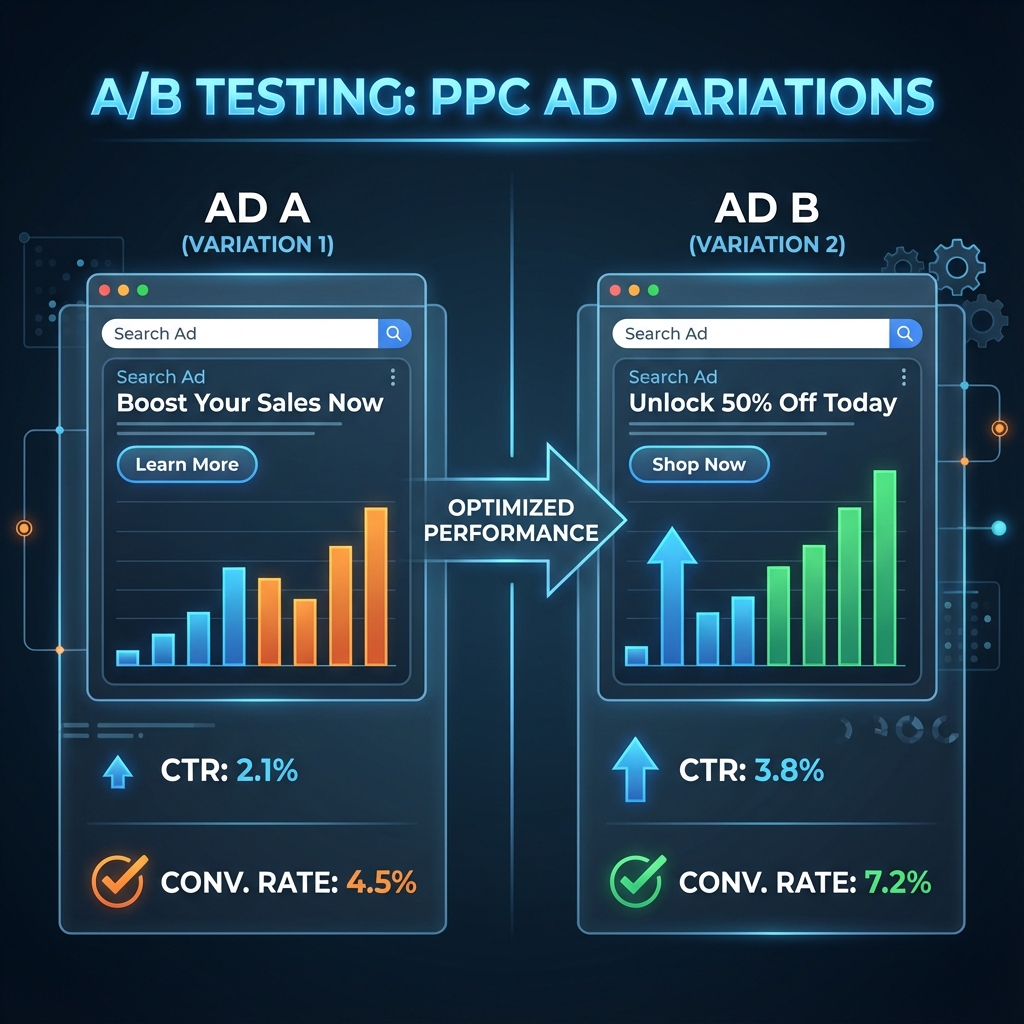
Continuous testing is the key to improving PPC performance. Follow this structured approach:
Week 1-2: Test Headlines
Keep constant: Bidding strategy, landing page, image, CTA
Change: Headline only
Test variations:
- Benefit-focused: "Get 30% More Leads with Our CRM"
- Question-based: "Struggling with Lead Management?"
- Urgency-driven: "Limited Time: Free Trial Ends Soon"
Winner: Use the best-performing headline in all ads going forward
Week 3-4: Test Ad Copy
Test different value propositions:
- Price-focused vs. Results-focused
- "Starting at Rs. 999/month" vs. "Increase Sales by 40%"
- Urgency-driven vs. Feature-driven
- "Limited Offer - Act Now!" vs. "Advanced Analytics Dashboard"
Expected improvement: 15-25% increase in CTR
Week 5: Test Landing Pages
Same ad → Two different landing pages
Test variations:
- Long-form vs. short-form content
- Video vs. text-based explanation
- Single CTA vs. multiple CTAs
- Different form lengths (3 fields vs. 7 fields)
Winner: Use the higher-converting landing page for future campaigns
Result: Expect 20-30% improvement in conversion rate through systematic testing
How to Handle PPC Campaigns Effectively
- Regular Monitoring: Track KPIs like CTR (Click-Through Rate), CPC (Cost Per Click), and conversions.
- A/B Testing: Test multiple ad copies, landing pages, and targeting options (use framework above).
- Quality Score Optimization: Improve ad relevance, landing page experience, and CTR.
- Negative Keywords: Prevent ads from showing for irrelevant searches to save budget.
- Adjust Bids Strategically: Increase bids for high-performing keywords and decrease for low performers.
Live Example Page
Imagine you run an online store selling organic skincare products:
- Platform: Google Ads
- Keyword: "Best organic face cream for dry skin"
- Ad Copy:
- Headline: "Organic Face Cream – Free Shipping Available"
- Description: "Try our natural face cream for glowing skin. Order now for 20% off!"
- Landing Page: A product page with CTA buttons like "Buy Now" or "Add to Cart."
- Result: Within the first week, the campaign drove 200 clicks and 30 sales.
Ready to Run Profitable PPC Campaigns?
Most businesses waste 30-50% of their PPC budget due to:
- Poor keyword targeting
- Weak landing pages
- No A/B testing
- Bad bid strategy
- Lack of conversion tracking
We'll review your account and show exactly where you're losing money—and how to fix it.
Or view our PPC management services to see how we can help you scale profitably.
Conclusion
PPC marketing is a powerful tool for businesses looking to grow online quickly. With proper strategy, monitoring, and optimization, it can drive highly targeted traffic and boost conversions. Whether you are a small business or a large enterprise, PPC can give your marketing efforts a measurable ROI.
Key takeaways:
- Start with thorough keyword research focusing on commercial intent
- Set realistic budgets based on your business size and goals
- Benchmark your CPA against industry standards
- Implement systematic A/B testing to continuously improve
- Partner with experts if you want to maximize results and minimize waste
Ready to take your PPC campaigns to the next level? Contact our team for a personalized strategy session.